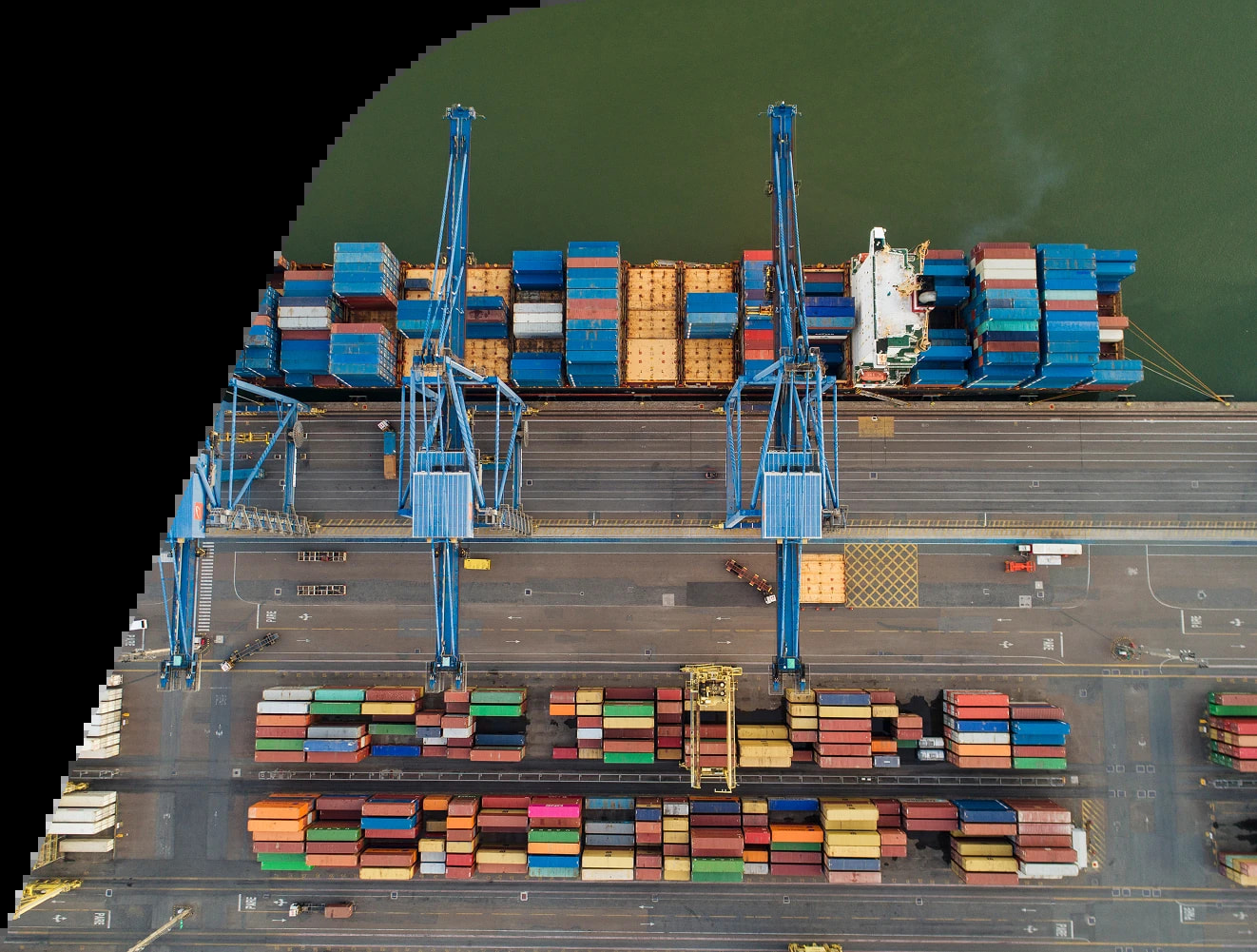
Portonave's yard fleet has been boosted with the arrival of seven new electric rubber-tyred gantry (e-RTG) cranes. The equipment, delivered on Monday (7), represents the first shipment of a total of 14 new units acquired by the Company.
Standing 28 meters tall and weighing 156 tonnes each, the cranes are fully electric, with no combustion engines, further reinforcing the Company's decarbonization strategy. The first seven units are expected to enter operation in August, while the remaining seven are scheduled to arrive by the end of July.
The cranes departed from Dalian, China, aboard a COSCO vessel on a route of approximately 20,000 kilometers. The first seven units are expected to begin operations in mid-August, with the remaining cranes scheduled to enter service during the first week of September.
Electric and Safer Yard Equipment
e-RTG stands for electric rubber-tyred gantry, the rubber-tyred crane used for container handling in the Terminal's yard. These cranes stack containers, organize cargo, and transfer containers between trucks and storage stacks.
Manufactured by Konecranes, designed in Finland, and built in China, the new equipment can handle loads of up to 41 tonnes and stack containers up to seven high. At Portonave, however, the operational stacking limit is five containers in accordance with the Terminal's safety protocols.
The cranes are equipped with advanced safety and efficiency features, including anti-collision sensors for stacking and travel operations, emergency braking during lifting, electronic load sway control, and automatic lubrication. When a container is lifted, its weight is displayed to the operator on the crane's onboard monitor.
Factory-Built Electric Equipment
The new e-RTGs arrive fully equipped to operate within the Terminal's yard electrification system, powered by batteries. This infrastructure has supported the remainder of Portonave's RTG fleet since 2016, when the Company completed the electrification of its 18 diesel-powered RTG cranes. As a result, greenhouse gas emissions from these cranes have been reduced by 96.5%.
Portonave's electric fleet will continue to expand. During the second half of the year, the Terminal will receive two new ship-to-shore (STS) cranes. In addition, 30 electric terminal tractors and five electric reach stackers will be delivered in stages through January 2027.
The equipment was acquired under REPORTO, a tax incentive program established in 2004 to promote the modernization of Brazil's port infrastructure. The program grants companies in the port and rail sectors exemptions from federal taxes on the acquisition of equipment, including Import Duty (II), the Tax on Industrialized Products (IPI), the Social Integration Program (PIS) contribution, and the Import Social Security Financing Contribution (COFINS-Import).
Ready for the World's Largest Vessels
The new RTG cranes prepare the Terminal for its next phase of expansion. Their acquisition represents an investment of approximately R$ 210 million. With the completion of the Quay Infrastructure Works, scheduled for the second half of 2026, Portonave will be capable of accommodating vessels of up to 400 meters in length.
Combined, Portonave's investments in infrastructure works and equipment acquisitions now exceed R$ 2 billion. Upon completion, the Terminal will operate with eight ship-to-shore (STS) cranes and 32 RTG cranes, increasing its annual handling capacity from 1.5 million to 2 million TEUs (twenty-foot equivalent units).
In April 2026, Portonave, Brazil's national leader in vessel productivity at berth, reached the historic milestone of 15 million TEUs handled since the beginning of its operations.
About Portonave
Located in Navegantes, on the northern coast of the state of Santa Catarina, Portonave began operations in 2007 as Brazil's first private port terminal. Today, it is one of the country's largest terminals for long-haul laden container handling and is Brazil's leader in vessel productivity, according to the National Waterway Transportation Agency (ANTAQ), with an average of 114 movements per hour (MPH) in 2025.