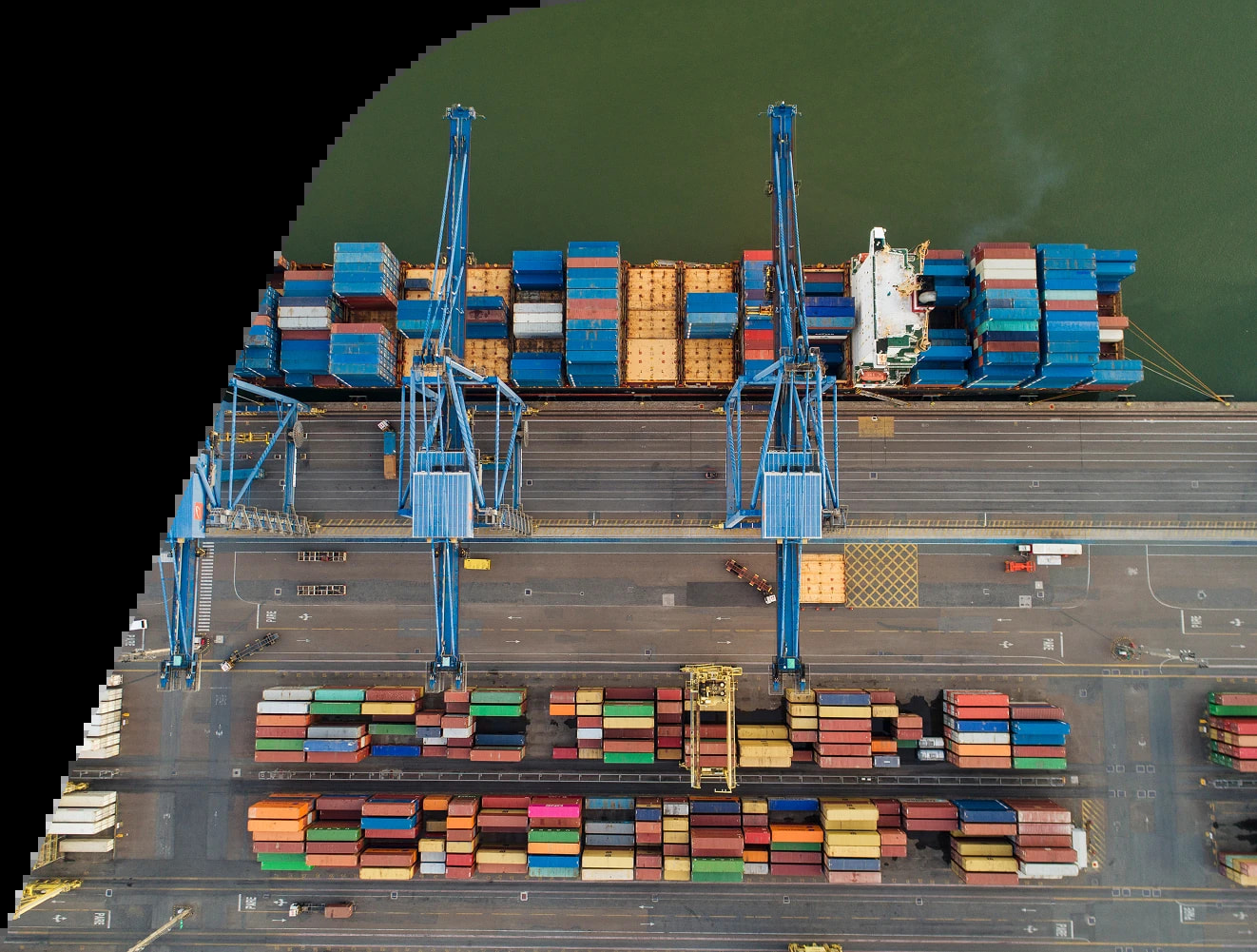
With a focus on the energy transition and improving operational productivity, Portonave, Brazil's first private container port terminal, has acquired 30 electric terminal tractors (e-TTs) manufactured by Terberg in Malaysia and five electric reach stackers (e-RSs) manufactured by Kalmar in China. The investment totals approximately BRL 61 million and is part of the Company's BRL 2 billion investment plan. The equipment is used for container handling operations in the yard and will be delivered in phases, with all machines expected to be operational by January 2027.
Compared to their diesel-powered counterparts, the new electric models significantly reduce greenhouse gas (GHG) emissions and support the Company's decarbonization strategy. The new fleet is expected to reduce GHG emissions by approximately 80% for reach stackers and 30% for the terminal tractors.
With the arrival of the new equipment, part of the diesel-powered terminal tractor fleet will be replaced. The Terminal will operate a total of 61 terminal tractors, including 31 electric and 30 diesel-powered units. The reach stacker fleet will increase to seven machines, comprising six electric and one diesel-powered units.
The new equipment also incorporates several advanced safety features, including ergonomic operator cabins, perimeter-monitoring cameras, anti-collision systems, and automatic fire-suppression systems. The new e-RSs are equipped with 800 kWh batteries, approximately 50% more powerful than the 533 kWh battery installed in the electric reach stackers currently operating at the Terminal, providing greater operational efficiency.
To support charging operations, the Company will build an electrical charging hub equipped with nine chargers for electric equipment. In addition, because electric equipment requires different operating practices—particularly regarding battery use, management, and optimization—the operational team will receive specialized training to operate the new machines.
The equipment was acquired under REPORTO, a tax incentive program that promotes the development and modernization of Brazil's port infrastructure. Created by law in 2004, REPORTO guarantees exemption from federal taxes so that companies in the port and railway sectors can acquire their equipment without having to pay import taxes, such as the Industrialized Product Tax (IPI), the Import Tax (II), the PIS contribution, and Cofins on imports.
BRL 2 Billion Investment Plan
The acquisition is part of Portonave's BRL 2 billion investment plan, which also includes the Quay Infrastructure Works, designed to enable the Terminal to accommodate vessels of up to 400 meters in length with a maximum draft of 17 meters, as well as the acquisition of additional equipment:
Two ship-to-shore (STS) cranes, used to transfer containers between vessels and the Terminal's yard; and
fourteen electric rubber-tyred gantry (e-RTG) cranes, used for container handling in the Terminal's yard.
In 2025, Portonave had already taken delivery of the first equipment under the investment plan, including two container inspection scanners and one electric reach stacker (RS).
Once these investments have been completed, the Terminal will operate with:
8 Ship-to-Shore (STS) cranes
32 electric Rubber-Tyred Gantry (e-RTG) cranes
7 Reach Stackers (RSs)
61 Terminal Tractors (TTs)
4 electric vehicles (EVs)
4 container inspection scanners
These investments will increase the Terminal's annual handling capacity from 1.5 million to 2 million TEUs (twenty-foot equivalent units).
About Portonave
Portonave is located in Navegantes, on the northern coast of the state of Santa Catarina, and began operations in 2007 as Brazil's first private container port terminal. Today, it is one of the country's largest terminals for long-haul laden container handling and is Brazil's leader in vessel productivity, according to the National Waterway Transportation Agency (ANTAQ), with an average of 114 movements per hour (MPH) in 2025. The Company currently generates approximately 1,400 direct jobs and 5,500 indirect jobs.